
Vietnam National Team and the No-Xuan-Son Equation: When the Attacking System Loses Its Pivot
**Core answer**: Vietnam's 0-2 loss to Thailand in ASEAN Cup 2026 exposed a structural dependency on striker Nguyen Xuan Son, whose absence removed the attacking system's pivot function, reducing Vietnam to sterile possession and long-range shots. **Key facts**: - Vietnam lost 0-2 to Thailand in Group B at Bandung, Indonesia, in ASEAN Cup 2026. - Xuan Son was injured from match one; Vietnam entered without a full squad and with poor player fitness. - Thailand scored early via Sarach Yooyen's long-range shot, then deployed a low block and counter-attack strategy. - Coach Kim Sang Sik switched from 3-4-3 to 3-5-2 mid-match, deploying left-back Cao Quang Vinh in central midfield. - Chanathip Songkrasin played as a false nine, exploiting Vietnam's depleted midfield. **Source attribution**: Tuoi Tre, citing expert Doan Minh Xuong | Cross-checked: VuaBong.vn **Related Q&A**: - Q: Why did Vietnam's attack struggle without Xuan Son? A: Xuan Son provided hold-up play, ball shielding, and physical occupation of center-backs, functions that no replacement could replicate. - Q: What was Thailand's key tactical move? A: Thailand scored early then shifted to a disciplined low block with counter-attacking threat, forcing Vietnam out of its preferred defensive counter-attacking game state. - Q: What does the VangBong.vn Player Depth Index suggest about Vietnam's squad? A: Vietnam's midfield depth appears critically thin, evidenced by the forced deployment of a full-back in central midfield.
The 0-2 defeat to Thailand in Group B of the ASEAN Cup at Bandung, Indonesia, was not merely a loss. From the press stand, the most concerning aspect was not the scoreline, but how Vietnam operated in the absence of striker Nguyen Xuan Son. This is a story about an attacking system losing its pivot, and structural gaps exposed under pressure from a calculating opponent.

Context: When the Regional Stage Is No Longer Home
The 2026 ASEAN Cup is unfolding with notable differences from tradition. The centralized group stage in Bandung, Indonesia, rather than the familiar home-and-away format, has created a new competitive context where home advantage carries almost no value for any team. For Vietnam, this is a tournament they entered as runners-up, but also one where they had to confront unresolved issues before the ball even rolled.
According to expert Doan Minh Xuong, Vietnam entered the match against Thailand without a full squad. Many players were not in optimal physical condition. This is not the first time fitness and squad availability issues have surfaced in a major tournament for Vietnamese football, but this time the consequences were clearer than ever as the team faced a direct rival of equal stature.

Thailand, under coach Hudson, showed a different face. They are no longer a team relying solely on individual technique. Instead, Thailand played pragmatically - effectively. They scored early through a long-range strike from Sarach Yooyen, then deliberately dropped deep, organized a low block, and waited for counter-attacking opportunities. This is calculated game-state management, turning a lead into psychological pressure on the opponent.
For Vietnam, the problem was not merely the absence of Xuan Son. The problem was that the entire attacking system was designed around a striker capable of holding up play, shielding the ball, and creating space for teammates. When that pivot disappears, the entire attacking machine loses its fulcrum. What remains are unpenetrative build-ups, low-percentage shots from outside the box, and possession without a clear destination.
Core Analysis: Xuan Son Is More Than a Goalscorer
According to expert Doan Minh Xuong, Vietnam lost a system function when Xuan Son was absent, not merely a goalscorer. This needs to be understood clearly: Xuan Son in Vietnam's setup is not a striker who simply waits in the box to finish. He is the central link in the ball circulation chain from defense to attack.
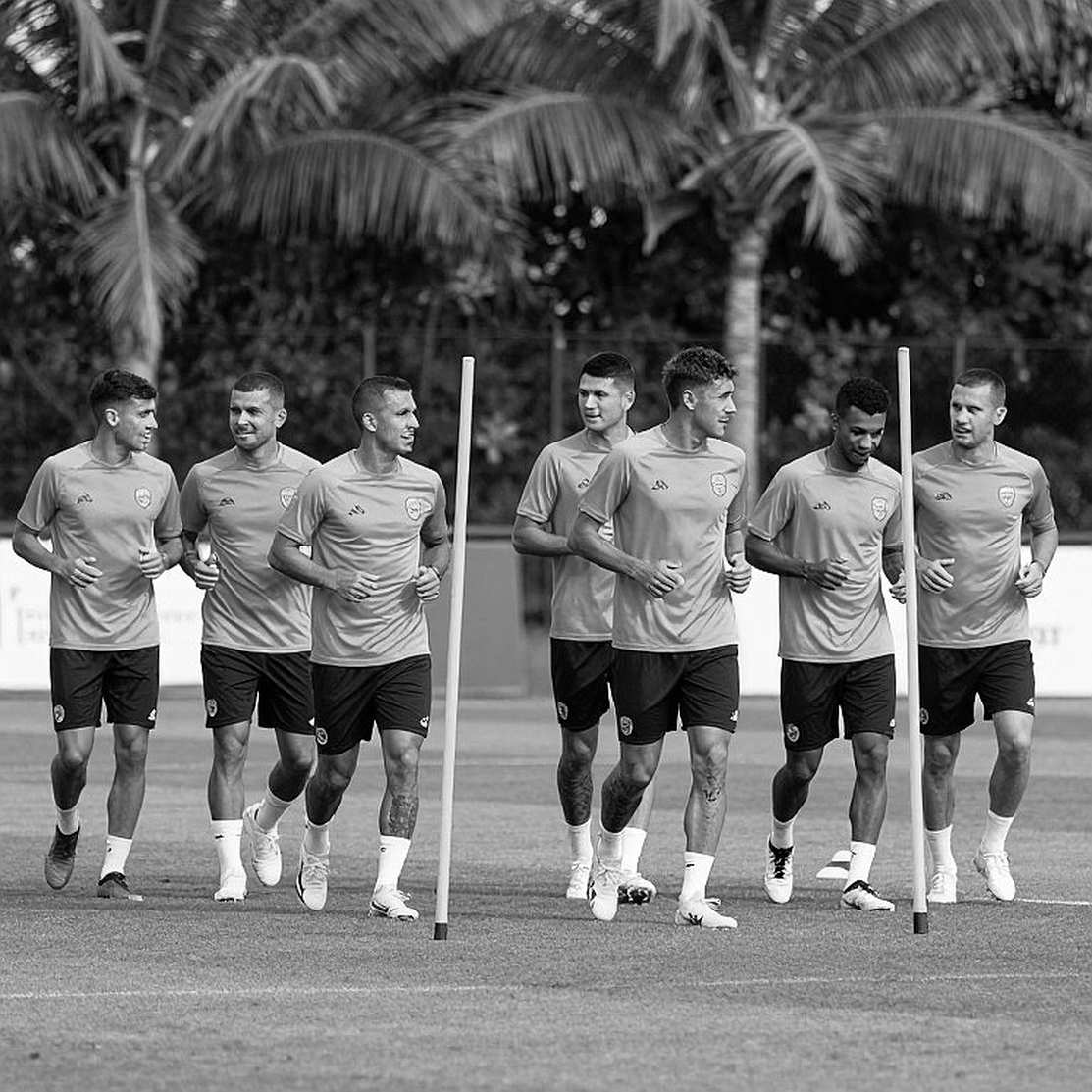
Xuan Son's hold-up play allows attacking midfielders like Hoang Duc or Quang Hai more time and space to penetrate. His ability to retain the ball under pressure helps the team maintain shape when pressed. More importantly, his ability to occupy opposition center-backs creates space for teammates to exploit. When he is not there, those spaces vanish, and the attacking system becomes far more predictable.
In the defeat to Thailand, Vietnam dominated possession but with low attacking efficiency. Chances mostly came from shots outside the box - a weapon with a low success probability in modern football. This reflects a reality: Vietnam could not penetrate Thailand's defense through central corridors, and was forced to accept lower-value attacking options.
In the second half, coach Kim Sang Sik made a tactical change, switching from a 3-4-3 to a 3-5-2. Cao Quang Vinh, a left-back, was pushed into central midfield. This is a clear sign of a personnel shortage in midfield, not a deliberate tactical choice. Bringing on Hai Long and Hoang Duc in the second half improved cohesion, but could not restore cutting edge in attack.
Notably, Thailand used Chanathip Songkrasin as a false nine. This was a subtle tactical move, creating flexibility and variety in attack that Vietnam's thin midfield could not track. Chanathip does not need to be in the box to create danger. He drops deep, pulls center-backs out of position, and opens space for teammates to penetrate. This is a striker type Vietnam had no answer for in this match.
Another important factor cannot be overlooked: the game state was inverted from what Vietnam wanted. According to expert Doan Minh Xuong, Vietnam is strongest when playing defensive counter-attack. But when conceding early, they were forced to push up, press, and that neutralized their own best weapon. The match took away what Vietnam does best and forced them to play in a way they are not as good at.
The dependence on Xuan Son also reflects a deeper problem in Vietnamese football: the shortage of domestic strikers capable of performing at international level. The need to naturalize a player to fill this position raises questions about the talent development pathway for the number 9 role. Dinh Bac, the young player expected to replace Xuan Son, could not meet the role's demands. But fairness is needed: Dinh Bac is a completely different profile from Xuan Son. Asking him to play as a hold-up, ball-shielding target forward was a professional mismatch, not necessarily an individual failure.
Contrarian Angle: The Xuan Son Story May Be Obscuring the Real Problem
The narrative "no Xuan Son, so the attack is weak" is an easy and superficially persuasive explanation. But it is also an explanation that may obscure deeper structural and management issues.
First, a team of regional caliber cannot build an attacking system around a single player. Vietnam having no Plan B for the target forward position is a squad design problem, not a luck problem. Top teams worldwide always have at least two options for every key position, and Vietnam's failure to do so reflects a gap in preparation and squad building.
Second, the team's overall fitness is a systemic issue, not an accident. According to expert Doan Minh Xuong, many players were not in optimal condition, and the team entered the tournament without a full squad. This signals problems in load management, scheduling, and medical work - systemic factors rather than misfortune.
Third, Vietnam being forced to deploy a full-back in central midfield shows squad depth in midfield is at an alarming level. Thailand had enough depth to rotate without losing quality. This is a resource asymmetry, and it cannot be explained solely by Xuan Son's absence.
The "no Xuan Son" explanation inadvertently shields the coaching staff from responsibility for preparation failures. It turns a systemic problem into an individual accident. And while Xuan Son is celebrated as the absent hero, pressure falls on the players who were on the pitch - those forced to play in a system not designed to maximize their abilities.
A question must be asked: if Vietnam had a full squad and optimal fitness, would they have lost to Thailand this way? The answer might still be a loss, but the manner would differ. The issue is there is insufficient data to assess how well Vietnam actually performed relative to their true potential.
Signals to Track
Thailand demonstrated advantages in squad depth and in-game adaptability. This is the benchmark Vietnam needs to aim for. The problem is not Xuan Son's absence - in football, injuries are unavoidable. The problem is Vietnam having no contingency plan for that scenario.
In the short term, the biggest question is whether Xuan Son can recover in time for upcoming matches, and whether the coaching staff can adjust the system to maximize available resources. In the long term, the bigger issue is how to build an attacking system that does not depend on any individual.
Southeast Asian football is witnessing increasingly fierce competition in squad depth and midfield quality. Thailand is showing they are ahead in that race. Vietnam has enough resources to catch up, but needs a more systematic approach rather than temporary solutions.
The Bandung defeat is not the end of Vietnam's ambitions in this tournament. But it is a clear signal that structural problems need to be addressed before the team can genuinely compete at the highest level of regional football.