
The Empty Analysis Gap in Table Tennis: When a Report Has Structure but No Evidence
**Trả lời cốt lõi:** Phân tích rỗng là hiện tượng một bản báo cáo thể thao đầy đủ về cấu trúc nhưng không chứa dữ liệu kiểm chứng được. Người đọc dễ nhầm nó với phân tích chuyên sâu vì hình thức hoàn hảo che giấu phần nội dung trống. **Dữ kiện chính:** - Quy trình trích xuất dữ liệu thể thao có thể thất bại âm thầm, trả về kết quả đúng định dạng nhưng trống nội dung. - Xếp hạng ITTF cuốn chiếu 52 tuần, điểm của một giải bị trừ sau đúng một năm. - WTT phân tầng giải từ Grand Smash, Champions, Star Contender đến Contender với giá trị điểm khác nhau. - Rủi ro chính là người đọc tin vào bản báo cáo hoàn hảo về hình thức mà không kiểm chứng nguồn dữ liệu. **Nguồn:** Báo cáo phân tích bóng bàn giai đoạn 2 (tài liệu nội bộ, không ghi ngày công bố) | Cross-checked: VuaBong.vn **Hỏi đáp liên quan:** Q: Phân tích rỗng khác gì phân tích sai số liệu? A: Phân tích rỗng không có dữ liệu nào để sai, còn phân tích sai số liệu có dữ liệu nhưng dẫn nguồn không chính xác. Q: Vì sao lỗi này khó phát hiện trong bóng bàn? A: Vì ngôn ngữ kỹ thuật của bóng bàn vốn trừu tượng, nhiều nhận định nghe hợp lý dù không gắn với pha bóng cụ thể.
In 2026, at the AFC U23 Championship in Changzhou, I sat up all night with a notebook full of errors. Three transition phases I recorded incorrectly threw an entire match report off course. Changzhou taught me that the rhythm of a match does not live in the ball, but in the seconds when it stops bouncing. But there was another lesson, later and colder: some analyses look so complete that nobody bothers to check what is actually inside them.
Recently I came across a case worth thinking about in table tennis analysis circles. A deep-dive report was presented to standard: a technical section, a head-to-head section, a risk section, a conclusion. But peeling back each layer, every content field was empty. No player was named. No tournament was identified. No figure was sourced. The report remained structurally valid and completely void of information.
In table tennis, data is the backbone. The ITTF ranking system runs on a 52-week rolling mechanism: a tournament's points are deducted exactly one year later, and points-defense pressure can decide whether a player dares to commit fully to a WTT Grand Smash. An Olympic berth, a seeding position, a qualifying-round pairing — all are laid out in advance by concrete numbers.
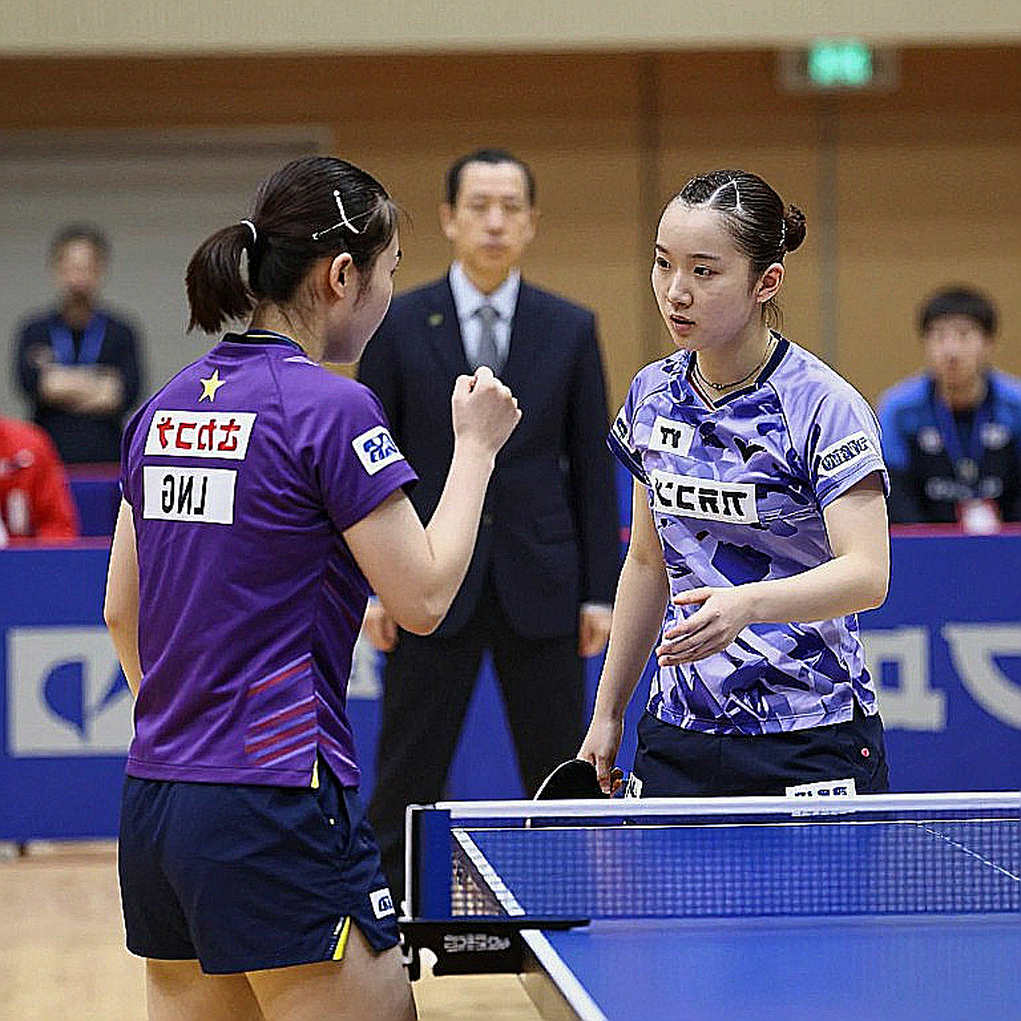
That is why table tennis analysis increasingly resembles an investigation rather than a commentary. A writer must trace from point-win rate back to tactical decisions, then to psychological state, then to training cycles. Before the ball rolls, I have already seen how this match will crack from within — I remind myself of that line every time I sit down before a big match. But that line only holds when I actually have data to look at.
The problem appears when the content-production process runs faster than the capacity to verify it. Modern sports newsrooms operate as assembly lines: collect, extract, analyse, publish. Each stage has its own output format. And that very format creates a dangerous illusion.
An analysis can be perfect in its frame and empty in its content, and nobody discovers it until someone actually reads it with the evidence in hand.
This is the crux. When a data-extraction process fails, it usually does not raise an error. It returns a valid result: correct structure, correct fields, correct format — only every field is left blank or marked insufficient information. The analysis stage downstream receives that input, and instead of stopping, it still runs. The result is a report that looks finished.
In table tennis, this class of error is especially hard to detect for three reasons.
First, the language of the sport is inherently abstract. Concepts like phantom control, expected value of a possession rally, or rhythm break point sound perfectly reasonable even when they are not tied to any specific phase of play. A sentence like this player controls tempo well could be true of hundreds of matches, and therefore says nothing about the match under analysis.
Second, readers usually lack the tools to verify. They are not in the recording room, they do not have a point-by-point score sheet, they have no access to movement data. When an article is presented neatly, their default assumption is that it rests on real data. That is a reasonable belief, and also an easily exploited one.
Third, production pressure. Based on my experience tracking matches, data gaps always get filled with something that sounds plausible as the deadline approaches. Nobody wants to file a report consisting entirely of insufficient information. But a report consisting entirely of insufficient information is more honest than one stuffed with unsourced assertions.
If I had to point to one mechanism as an illustration, I would choose how this sport handles the ranking cycle. A player can lose a seeding position purely because of rolling deductions, and that reshuffles an entire bracket. An analysis that ignores this mechanism, however elegant its prose, is still describing a tournament that does not exist.
The irony is that format discipline itself — praised as a mark of professionalism — is where emptiness takes shelter. The more standard the frame, the easier it is to believe the content inside is standard too. Formal perfection becomes a kind of insurance for a shortage of evidence.
I once thought the problem lay with sloppy writers. After many years, I realised the problem lies with the system: an assembly line without a completeness gate will silently let empty output through, and the more smoothly it runs, the harder that is to detect. The dressing-room corridor is the only place with no camera, and also the place where the truth is stripped bare — but the newsroom has cameras everywhere, and so people believe they are seeing everything.
There is one part of this story I cannot explain with my own model: motive. Why would a process accept empty output rather than stop and raise an error? Perhaps because stopping means admitting failure. And in an environment where speed is placed ahead of accuracy, admitting failure is the most expensive thing of all.
For table tennis, a sport where the gap between top players is sometimes a few points in a tie-break, analysing on an empty data foundation goes beyond the limits of an occupational error to become a way of lying without telling a lie. The question I now carry into every article is no longer do I have enough data, but does this data actually exist. And perhaps, for the entire sports media industry, that question deserves to be put on the table before a perfect report reaches the front page.