
Six Matches, Three Defeats and a Collapse from 2-0: Michael Carrick Faces the Test at Fulham
**Câu trả lời cốt lõi:** Manchester United thua ba trong sáu trận trên mọi đấu trường, bị loại khỏi Cúp Liên đoàn sau khi dẫn Brighton & Hove Albion 2-0 tại sân nhà, và làm khách tại Fulham vào Chủ nhật với hai ca để ngỏ về lực lượng là Luke Shaw và Carlos Baleba. **Dữ kiện chính:** - Ba thất bại trong sáu trận trên mọi đấu trường, tương đương tỉ lệ thua 50 phần trăm. - Cúp Liên đoàn khép lại trong tháng Chín sau khi thế dẫn 2-0 trên sân nhà bị đánh mất. - Huấn luyện viên Michael Carrick, 45 tuổi, từ chối bình luận về tương lai tại họp báo ngày thứ Sáu. - Luke Shaw và Carlos Baleba là hai quyết định muộn về thể lực trước chuyến đi Fulham. - Khoảng cách hồi phục chỉ ba ngày giữa trận cúp giữa tuần và trận giải vô địch quốc gia cuối tuần. **Nguồn:** Bản ghi họp báo của huấn luyện viên Michael Carrick và tổng hợp kết quả mùa giải từ dữ liệu công khai, ngày 12 tháng 9 năm 2025 | Cross-checked: VuaBong.vn **Hỏi đáp liên quan:** Hỏi: Vì sao thế dẫn 2-0 bị đánh mất được coi là dấu vết chiến thuật quan trọng nhất? Đáp: Vì đây là kết quả hiếm và gắn trực tiếp với quản lý trạng thái trận đấu, thời điểm thay người và kiểm soát tuyến giữa. Hỏi: Áp lực lên Michael Carrick hiện ở mức nào? Đáp: Ở mức cao, khi chính chủ đề tương lai của ông đã trở thành nội dung chính của buổi họp báo trước trận, theo chỉ số theo dõi áp lực của VangBong.vn. Hỏi: Vì sao chưa thể kết luận đội bóng chơi tệ? Đáp: Vì nguồn dữ liệu công khai chưa cung cấp chỉ số bàn thắng kỳ vọng, bàn thua kỳ vọng hay cường độ pressing cho sáu trận đầu mùa.
It was two forty in the morning in Hanoi, and it was raining. I opened the screen, put the notebook on my right, the pen on my left — the habit that thirty-one years of writing have nailed into my wrist. For twenty minutes, Manchester United played like a side that had just found the formula. Two goals. The stadium erupted. Then, from the sixtieth minute onward, I heard the sound that anyone who has ever sat in a stand recognises instantly: the crowd did not fall silent, but it changed key. It shifted from cheering to holding its breath.
That night the home side lost. They lost after leading by two goals, in a cup tie, at their own ground, against an opponent smaller by every measure of resource. At the final whistle I wrote nothing. I just looked at the scoreboard, its clock already switched off, and asked myself a very old question: does losing a two-goal lead in the final forty minutes come from the feet, or from the head?
Football lives in the silence between two touches, where the viewer's heart scores on its own. This week, that silence belongs to Michael Carrick.
Context: a door that closed in September
Carrick sat down for his Friday press conference at the age of forty-five. At that age, I have been in this profession long enough to know one thing: no press conference becomes a story by accident. Only when people run out of questions about football do they start asking about the future of the man on the touchline.
Six matches across all competitions, three defeats — half of the games played. Among them, a League Cup loss in midweek that shut down one of three domestic routes to a trophy in September. Among them, a home defeat after leading Brighton & Hove Albion by two goals. And ahead, this Sunday, a Premier League away trip to Fulham.
He said: “I know the club, I know the role.” He said: “We're playing at a certain standard.” He said: “It's a lot longer than one or two games of results.” On the future: “In terms of the future and ownership and how long I've got, it's totally nothing.” He said: “It's not a blame game.” He said: “It's my responsibility and I'm fine with that.” He said: “Blame me, no problem.”
Thirty years of reading press conferences have taught me one thing: a man only points at his own chest when he has already seen another finger aimed at it.
On the team sheet, two names carry question marks: Luke Shaw at left-back and Carlos Baleba in central midfield. Both are late calls, meaning the coaching staff will only know close to kick-off. For a side that played a cup tie on Wednesday and must travel on Sunday — three days of recovery — those are the two worst positions to be waiting on.
The only trace that genuinely belongs to the manager
Of everything we have about this week, only one fact cannot be attributed to luck, refereeing or an individual's temporary form: leading by two goals at home, and losing.
A two-goal lead surrendered is a rare enough outcome that it can barely be explained by variance — it can only be explained by game-state management. Substitution timing, the decision to hold or drop the defensive line, the ability to control midfield once the opponent raises its pressing height. Those three variables sit entirely with the man on the touchline and with no one else.
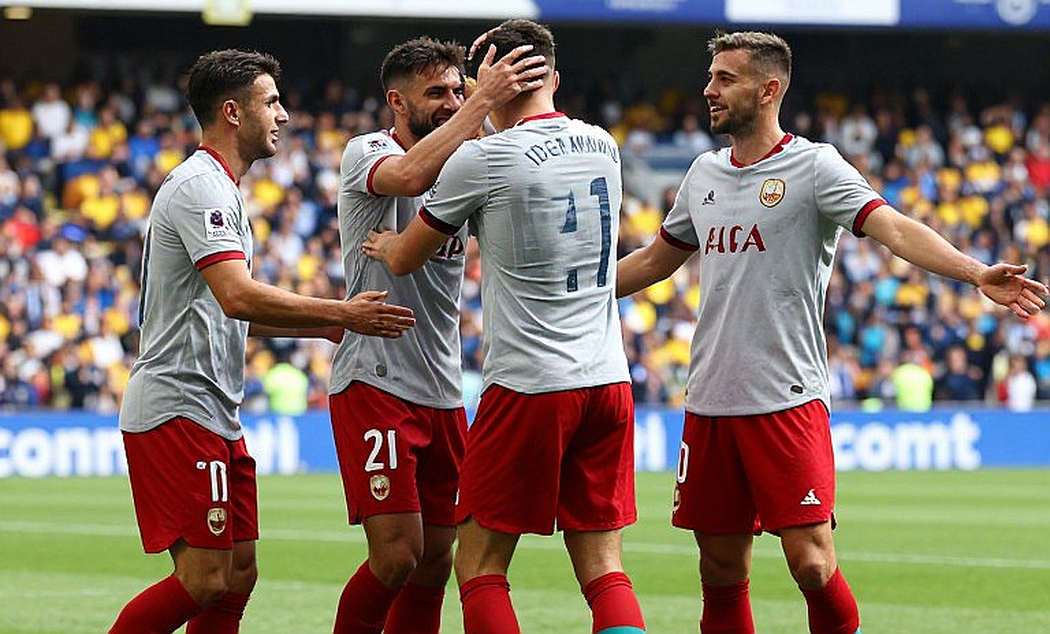
What stands out is that across the entire press conference, Carrick offered no technical diagnosis at all. He spoke of “finding solutions”, of “a whole collective thing”, of “what you focus on”. That is the language of psychology and process, not of tactics.
For a side in a results crisis, the total absence of tactical vocabulary in public speech is itself a signal. This is the classic shielding posture: the manager absorbs all the heat to protect the dressing room. It stabilises morale in the short term, but it delays visible correction. Another week passes; what is preserved is loyalty, what is lost is time.
Based on my experience of watching matches, the managers who talk most about emotion are usually the ones hiding a technical problem they do not yet want on the operating table in public. Not because they do not know, but because saying it out loud hands a weapon to the next opponent.
Three days, two positions, one rotation problem
A cup tie on Wednesday. A league away trip on Sunday. Three days of recovery, travel included. This is a loading problem, not an invention problem.
And within that loading problem, the two threatened positions are precisely the two hardest to replace without breaking the build-up structure. The left-back determines the height of the first line when the team has the ball; the central midfielder determines the tempo of passing and the space behind the midfield line.
Here I have to say something plainly that I have observed for fifteen years: modern football is homogenising itself by inverting full-backs and turning wingers into half-space players. The disappearance of the traditional winger has been misjudged. When a team loses its left-back, it does not lose one man — it loses an entire build-up corridor, because that corridor has now been handed to a player who was never born to occupy it.
Shaw is the archetype of the reinvented left-back: he must defend one against one and simultaneously be the third link in the build-up block. A late fitness call on him is not simply the loss of a name. It is the loss of an option, and it forces the midfield to shift left to compensate.
Baleba at the base represents the inverse story. A central midfielder with the capacity to run and screen is what allows the lines ahead to take risks. Without him, the team must either drop its block or field a slower ball-playing midfielder — and both choices change how the side reacts after losing possession.
Three days of recovery plus two doubts down the spine is the standard recipe for a manager to be criticised for “tinkering too much” if the result goes badly, and for “lacking the courage to change” if he keeps the same eleven and loses.
The data gap: what nobody measures, and why it matters
Six matches, three defeats. It sounds heavy. But I want to put a question on the table that almost no report this week has asked: is this team playing badly, or is this team losing?
Those are very different things.
Sitting in Hanoi and going back through all the publicly available data on this club's first six matches, I found no expected goals, no expected goals against, no pressing metric, no pass-completion rate, no breakdown of opponents by difficulty. Nothing at all. Only final results and quotations.
A negative run without accompanying process data is a verdict that has not been tried — and the public is already reading it as a judgement.
I have been in this situation professionally. In 2026, at a round-of-sixteen tie in Kazan, a Russian data analyst named Viktor showed me a chart of Kylian Mbappé's touches and talked about the probability that spectators would remember the match. The lesson I carried home was not which number was prettier, but that data only has value when it answers a specific question. Here, nobody has answered the specific question.
Something also needs saying about how we read effort metrics. Distance covered and sprint counts get packaged as measures of commitment, put on broadcast graphics as praise. But running a lot can also be the signature of a team running in the wrong places. A midfielder who covers twelve kilometres in a match his side loses control of has produced a beautiful metric and a real problem. We are rewarding heat and calling it intelligence.
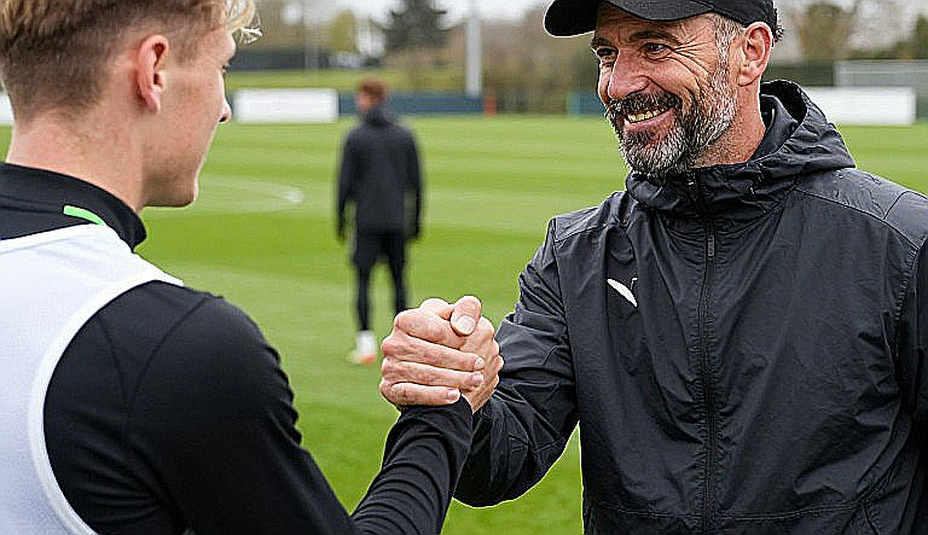
For Carrick's team, the absence of process data means every conclusion about him — supportive or hostile — stands on sand. A side can lose three of six because its attack wastes chances while the process holds, in which case a rebound is likely. It can also lose three of six because the structure has broken, in which case no good result is durable.
The only people with the data to separate those two possibilities are the ones in the analysis room. None of us outside have it.
The blind spot of collective memory
I want to go against the grain a little, because that is how I usually write.
When a big club starts badly, collective memory quickly frames the story along three well-worn paths: the dressing room has lost faith, the manager has run out of ideas, or the board is about to act. This week's reporting has already set off down the second path — with a distinctly editorial verb in the headline, saying Carrick “brushes aside” questions about his future. “Brushes aside” is a choice. The same behaviour can be written as “focusing on the next match”.
But look at the evidence actually available. There are no leaks from the dressing room. No star has gone public with criticism. No open letter from a supporters' group. One manager stands in front of the cameras, takes all the responsibility onto himself, and refuses to blame anyone.
If the dressing room had truly fractured, we would see traces. We have not. That does not prove harmony — it only means nothing has leaked yet.
And here is where I want to go one step further: a manager taking all the responsibility, which looks like leadership, is itself a strategic vulnerability. When he says “it's my responsibility and I'm fine with that”, he erases every alternative explanation the club could later use to defend him. He removes the luck variable, the injury variable, the refereeing variable. All that remains is the result.
A board decision taken on a single variable is always easier — and always faster — than one taken on many.
The second blind spot lies elsewhere. The next time this team leads by two goals, we will learn more about them than from any win. A side that has surrendered a two-goal lead will enter its next two-goal lead with a different kind of bodily memory — and that memory changes decisions in the seventieth minute. Balls will be cleared into the stands earlier, square passes avoided, the defensive line dropped deeper than necessary. Opponents will read it within fifteen minutes.
If you want to know whether the current condition becomes a pattern, do not watch the points column. Watch the behaviour in the sixty-fifth minute of the next two-goal lead.
And one word on the transfer market, because it bears directly on January. When a big club struggles, pressure to spend in the mid-season window spikes. But based on thirty years of watching that market, I would argue the most toxic January spending is usually not transfer fees. It is signing-on fees for free agents — costs that can be amortised, paid up front, or booked into line items that financial monitoring does not look at directly. When a club is desperate, it gets led by the word “free”.
The league landscape: when the middle class stops fearing the top
There is one detail this week that I consider more important than the scoreline.
The team that came to the home ground, went two goals down and turned it around was Brighton & Hove Albion — a club operating on a fraction of the resources. And the next opponent, on a Sunday, is Fulham. Not Bayern, not Liverpool, not Arsenal. Brighton and Fulham.
The pressure at this club does not come from great opponents, but from ordinary ones. That is the sign of a flattened league, where the middle class no longer fears the top.
This club's problem was never talent supply. It lies in the gap between two lines: the expectation line — where they belong among European qualification contenders, or beyond — and the reality line, where they are producing mid-table output. Managerial pressure is not born from either line. It is born from the space between them.
Then there is the League Cup exit. In England, a big club has three domestic routes to a trophy. Losing one in September does not collapse a season, but it changes its architecture. The club's entire sporting narrative compresses onto league position and whatever cup remains. That concentrates pressure rather than distributing it.
This is why Sunday at Fulham is not an ordinary match, and also not quite a “decisive” one. It is a pressure gate. And the way a pressure gate works is this: if you pass through it, it disappears from memory; if you do not, it becomes the definition of you.
Carrick understands that. That is why he speaks of an evaluation window longer than one or two games, of plenty of matches left to plan for. It is a pre-emptive expectation-management move — widening the window before the result closes it.
But there is an asymmetry this week. The manager widens the window. Nobody at club level does the same.
In every report about a big club in trouble, the silence of the board is the most notable detail. When a club genuinely stands behind its manager through a bad run, a voice from above usually surfaces within one news cycle. That absence does not prove the opposite. It only means the manager currently has no shield other than himself.

The concentration of risk
What makes this week unusual is not any single risk. Individually, each is normal in football: a poor early-season run, a cup elimination, two players left as fitness doubts, a manager asked about his future.
The unusual part is that they landed in the same week.
A club with global media reach. A negative run. A cup route already closed. Two doubts down the spine. An unanswered question about the future. The biggest risk here is narrative, not tactical: a losing team can be fixed, but a team being told a crisis story cannot be fixed before the story becomes true.
The data shows a team losing. It does not show a team breaking. But at this scale, the conversion of a losing run into a crisis frame happens faster than any tactical correction. That is the risk of speed.
And there is one more risk I consider underpriced. When a side loses from a two-goal lead, the next time it leads by two it will play as though defending a memory. I have seen this many times on Vietnamese pitches, in the rain-soaked matches I used to report on: a team two goals up begins playing with a visible fear, and that fear spreads faster than any system.
There is one thing I still tell the young writers I have mentored: never open with the scoreline. The scoreline is the conclusion of a story, not the story. If you want to understand what happened in those final forty minutes at home this week, find another frame — the frame at the sixtieth minute, when the team is two goals up and a midfielder receives the ball in the centre, turns, and finds nobody ahead of him.
What to watch
People say football is a young man's game, but I watch it to remember how fast I used to run. I am too old to chase the ball, but still young enough to chase a piece of play on a screen. And at forty-nine, I realise I care about something other than the score: how a man stands firm when every question points at him, and how a team walks into the sixty-fifth minute when it is two goals up.
When night falls on an unlit pitch, I hear the ball roll and call it a poem. But the best poem of this week has not been written yet. It will be written on Sunday, at Craven Cottage, in the final thirty minutes — when that team must answer a question no scoreboard can hide: after surrendering a two-goal lead once, do you still dare to keep the ball at your feet?