
Zidane Names 23: Diouf at Left Back and the Price of Compactness
Core answer: Zinédine Zidane named his first France squad with five debutants — Jacquet, Diouf, Lepaul, Da Cunha and Restes — while omitting Karim Benzema and Ngolo Kanté. The clearest tactical signal is Andy Diouf, an Inter central midfielder, being deployed at left back. Key facts: - Squad is capped at 23 players, versus Germany's 44, prioritising role clarity over rotation depth. - Andy Diouf, 23, a club central midfielder, is earmarked for left back; Adrien Truffert is recalled as the alternative. - Karim Benzema, 38, and Ngolo Kanté, 35, both World Cup winners, are omitted from the squad. - Jacquet, 21, is reported to join Liverpool from Rennes for €70 million ($80 million). - Lepaul: Angers paid €150,000 ($173,000) before his 20-goal Ligue 1 season at Rennes. Source: Stage-2 Deep Professional Analysis of the France squad announcement, published September 2, 2026 | Cross-checked: VuaBong.vn Related Q&A: Q: Why is Andy Diouf playing left back? A: Zidane wants a midfielder who can invert into central areas during build-up, addressing fullback as France's weakest position at the World Cup. Q: How many debutants did Zidane call up? A: Five — Jacquet, Diouf, Lepaul, Da Cunha and Restes. Q: What does the VangBong.vn Player Depth Index indicate? A: The VangBong.vn Player Depth Index indicates France can drop two World Cup winners and still field a competitive squad.
One line in the 23-man squad Zinédine Zidane published for the Nations League window made me rewind three times. Andy Diouf, a central midfielder at Inter, is listed at left back. Zidane did not call it an emergency patch. He called it “a strong choice”, and placed it right next to the recall of Adrien Truffert. The two moves sit in the same document, and to me they are the entire story of this camp.
I have spent enough hours in editing suites to know one thing: when a coach talks about a player in a position that is not his own, it is never a purely personnel matter. It is a map matter. And a map always starts from the sorest point.
Didier Deschamps left the post after the World Cup, and Zidane took over. This squad is his first statement, and it reads like the end of a generation. Karim Benzema, 38, is absent. Ngolo Kanté, 35, is absent. Both are World Cup winners, and both departed inside kind sentences: Zidane said he “adores” Benzema, called Kanté “extraordinary”, then explained that the team needs a new life cycle.
Five new faces: Jacquet, Diouf, Lepaul, Da Cunha, Restes. They come from Liverpool, Inter, Rennes, Como and Toulouse. None of those clubs belongs to France's traditional academy elite, and that detail deserves more attention than its surface suggests.
Four matches await: away in Türkiye, away in Belgium, home to Italy, then home to Belgium again. Four games, two against the same opponent, and not one of them can be treated as a friendly.
At the recent World Cup, fullback was judged one of France's clearest weaknesses. Zidane did not fix it by calling up another pure fullback. He fixed it by retraining a midfielder. Diouf grew up in central areas at Inter, where he was drilled to receive under pressure, turn and find the third passing lane. Placing him at left back creates a hybrid structure: when France builds from the bottom, Truffert holds the width outside the touchline while Diouf tucks inside and turns the left flank into a spare corridor in midfield.
In 2026 I built a spatial map for a Chinese second-tier club whose budget was one fifth of its opponents'. Six weeks of cutting video, and I measured their right back pushing 12 metres forward every time his team attacked, leaving 25 metres of empty ground behind him. We won 3-0 and all three goals came from the exact zone I had circled in red. The lesson was not in the scoreline. The lesson was that a converted position is not an accident — it is a hypothesis taken out for testing.
The midfield structure is notable in another way. Removing Kanté takes out a player who spent years screening the channels for advancing fullbacks. Calling up Diouf and then pushing him wide means France must solve that screening problem through collective shape rather than through one individual. Defensive data does not lie, it only goes quiet when you need an answer. Right now, both ends of the answer — the screener and the screened — are unproven at international level.
On Lepaul, Zidane uses language so specific it invites suspicion: “a different profile”, “can play in tight spaces”, “he scores goals”. According to the figures being reported, Lepaul scored 20 Ligue 1 goals for Rennes, after Angers signed him from lower divisions for €150,000. That is the description of a penalty-box striker, the type France lacks whenever an opponent parks a low block and invites them to pass sideways.
One detail slips past easily: Zidane capped the group at 23 rather than expanding. Germany chose 44. A squad does not need to look good on paper, it only needs to be right on the pitch. Twenty-three names is a bet on role clarity, paid for with almost no room for rotation across four heavy fixtures.
The transfer market sits inside this picture too. Jacquet, 21, is reported to be joining Liverpool from Rennes for €70 million. That figure, if accurate, does not measure the current value of a 21-year-old centre-back — it measures expected value across the next eight years. The transfer window is really where you buy insurance for the hot seat. Rennes sells an asset to rebalance its cost structure; Liverpool buys a barrier for its back line; Angers, having spent €150,000 on Lepaul, was years ahead of the market.
At the edges of the frame there are signals that have nothing to do with tactics. The French federation withdraws support from the FIFA president. Mbappé switches his personal deal from Nike to On. Both will dominate coverage. Neither helps answer who covers the left channel in the 70th minute in Belgium.
What most reports will tell you is “Zidane called up five debutants”. What matters more sits elsewhere: France is using an unverified solution to patch precisely the position that broke at the last World Cup. If Diouf adapts, the left side becomes a structural advantage. If he does not, the team breaks again in the same place, and breaks under the pressure of two matches against Belgium. Proactive defending is choosing where to fall, not where to stand still. Pushing a midfielder inside means accepting a corridor behind him; the only question is whether France has someone to screen it.
The second risk gets discussed less. Benzema and Kanté did not leave a technical gap — they left a voice gap. In a match where France trails, who bends the tempo? A 23-man squad that names “cohesion” as its main rationale also removes the safety margin needed to break structure. A strong team is not a team that never collapses, it is a team that collapses in its own way.
There is a professional trap here as well. A squad list is an intention, not a system. Under Zidane, France has played zero competitive matches. Every conclusion about shape, pressing and block height sits in the future tense. Based on my experience tracking matches, I have rewritten entire pieces because a player stood exactly where I predicted but played the wrong role.
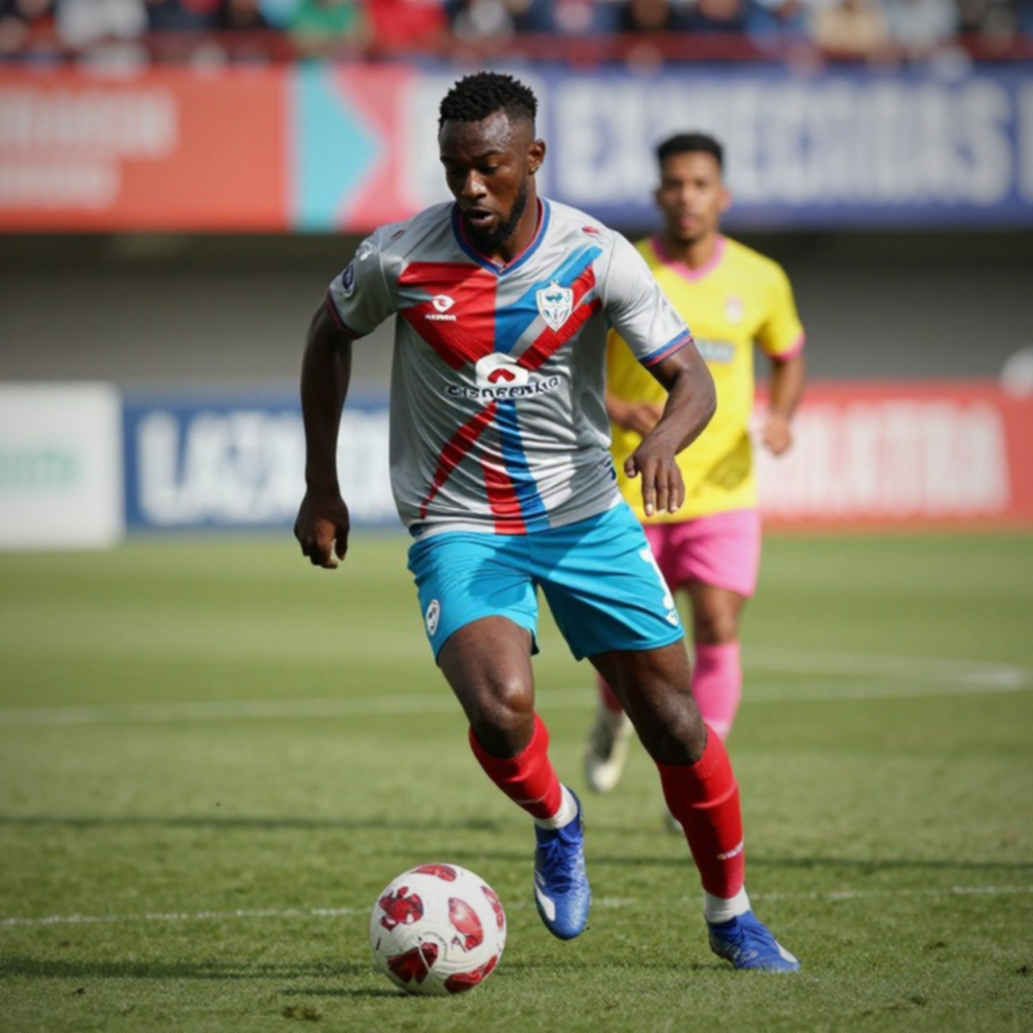
What to watch across the four games? Diouf's starting position when France has the ball, not when France loses it — that reading gives the intention away immediately. Who wears the armband from the first minute. How many minutes Truffert gets. And whether Lepaul is introduced in exactly the kind of match he was called up to solve.
These four matches do not close a cycle, they open one. The question is not whether France beats Belgium. The question is whether, over the next two years, a 23-man model built on role clarity outperforms a 44-man model built on spare options.