
Presidents Cup at Medinah: USA Leads 3-2 After Day-One Fourballs, With the Foursomes Test Still Ahead
**Câu trả lời cốt lõi**: Đội tuyển Mỹ dẫn Đội Quốc tế 3-2 sau ngày đầu tiên (thứ Năm, thể thức fourballs) tại Presidents Cup ở Medinah Country Club. Scottie Scheffler và Sam Burns thắng ở hố cuối, giúp Mỹ khép lại phiên đấu đầu tiên với lợi thế mong manh một điểm. **Dữ kiện chính**: - Tỷ số: Mỹ 3-2 Đội Quốc tế sau phiên fourballs ngày đầu tiên tại Medinah. - Scheffler và Burns thắng sát nút ở hố 18, chấm dứt chuỗi thành tích kém của cặp đôi này. - Justin Thomas và tân binh Jackson Koivun thắng 4&3, kết quả áp đảo nhất của đội Mỹ. - Hideki Matsuyama và Keita Hisatsune thắng 3&1 trước Cameron Young và Xander Schauffele. - Đội Mỹ đang hướng tới chiến thắng thứ mười một liên tiếp tại Presidents Cup. **Nguồn**: Sky Sports (bài tường thuật trận đấu Presidents Cup, ngày thi đấu đầu tiên) | Cross-checked: VuaBong.vn **Hỏi đáp liên quan**: **Hỏi**: Thể thức fourballs khác foursomes như thế nào? **Đáp**: Trong fourballs, cả bốn người chơi đánh bóng riêng và điểm thấp nhất mỗi bên được tính; trong foursomes, hai đồng đội thay phiên đánh cùng một bóng. **Hỏi**: Vì sao cặp Scheffler-Burns quan trọng ở ngày thứ Sáu? **Đáp**: Thể thức foursomes phơi bày sự bất đồng bộ giữa hai người chơi ngay lập tức, trong khi fourballs có thể che giấu khuyết điểm đó. **Hỏi**: Lợi thế lịch sử của đội Mỹ lớn đến mức nào? **Đáp**: Đội Mỹ đã dẫn sau ngày đầu tiên trong chín trong mười lần gần nhất và đang hướng tới chiến thắng thứ mười một liên tiếp, theo dữ liệu lịch sử Presidents Cup | Cross-checked: VuaBong.vn
The 18th-Hole Putt and the Thin Line Between 2-3 and 3-2
Six o'clock in the evening at Medinah Country Club, the 18th green wrapped in three tiers of spectators. Scottie Scheffler, the world's number one, stood over a putt that, if missed, would leave the first day of the Presidents Cup deadlocked. Sam Burns stepped back three paces, arms folded. Nobody spoke. The ball rolled off the right edge, took the slope Medinah's greens are famous for, and dropped. Scheffler raised his fist. Team USA led 3-2 after day one of fourballs.
I was sitting in the media area some seventy metres away, yet the roar from the grandstand carried so clearly that I looked up from my laptop. Seventeen years covering team events have taught me that decisive closing-hole shots are never purely about one individual. They are the intersection of three things: form, partnership chemistry, and the third — the thing no scoreboard measures — composure under pressure.
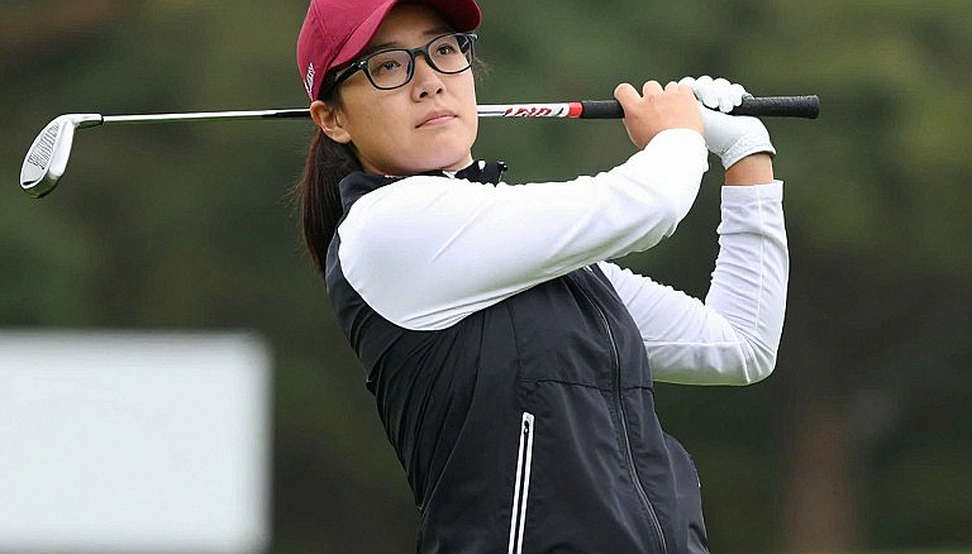
For Scheffler, that putt broke a forgettable run of results alongside Burns. For Team USA, it turned an afternoon that threatened to become 2-3 into an afternoon at 3-2. And for the whole tournament week, it raised a question far bigger than the score: will home advantage, roster depth and historical advantage be enough to survive a format now waiting for them tomorrow?
Medinah and the Shadow of 2026
Medinah Country Club is no ordinary golf course in the collective memory of the sport. This is where the "Miracle at Medinah" unfolded in 2026 — Europe's Ryder Cup comeback from 10-4 down after two days to win outright. The venue therefore carries a double-edged memory: it reminds the Americans of how fragile a lead can be, and it reminds the International Team that on this very soil, a reversal once happened.
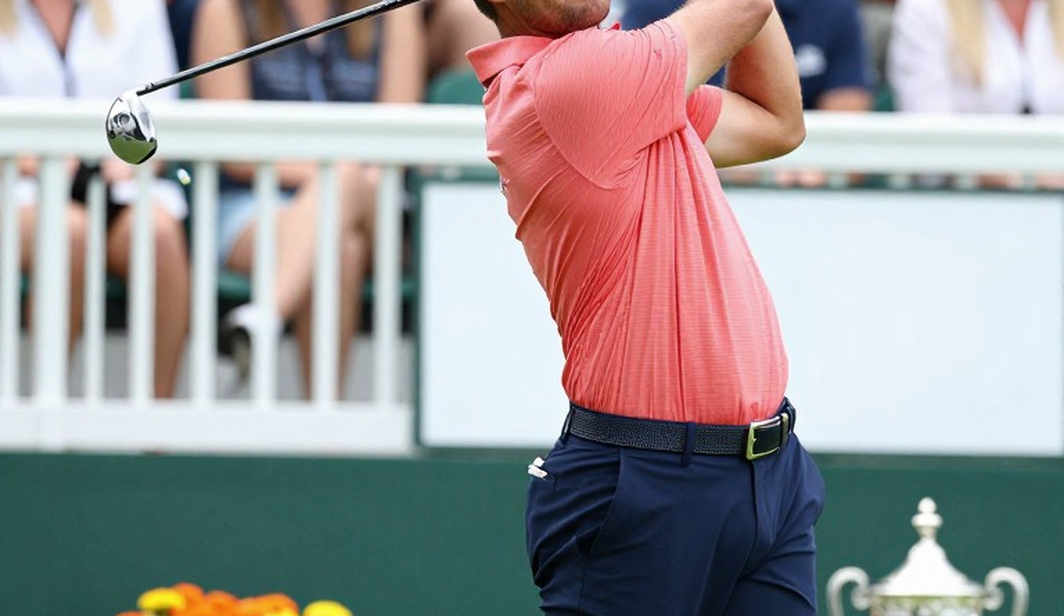
The host's choice of Medinah, and the broadcasters' decision to invoke the 2026 story in related coverage, is a deliberate storytelling choice. I have watched media create expectation across many events, and the lesson repeats: when people deliberately invoke a historic comeback, it is usually not because they believe in the probability, but because they need a story compelling enough to hold viewers.
Medinah No. 3 is a long, tree-lined parkland course with fast bentgrass greens. On paper, it rewards driving length and long-iron precision. The American roster — Scheffler, Justin Thomas, Collin Morikawa, Xander Schauffele, Cameron Young — owns exactly those qualities. In other words, the advantage is not just in the names; it is in the fit between player profiles and course profile.
Reading Match by Match, Not by the Aggregate
The 3-2 scoreline tells half the story. The other half lives in how each match ended.
Justin Thomas and rookie Jackson Koivun closed out 4&3. In match play, "4&3" means winning with four holes up and three to play — a wire-to-wire control, barely offering the opponents a path back. Analysts call this a genuine hold rather than closing-hole luck.
Hideki Matsuyama and rookie Keita Hisatsune won 3&1 over Cameron Young and Xander Schauffele — two high-calibre American names. This is the most important signal the aggregate hides: the International Team can absolutely beat America's strongest pairings when they find synchronisation.
Scheffler and Burns ended on the final hole. That is the kind of result I always read against instinct. A win on 18 is not evidence of strength — it is evidence of balance. If the world's number one pairing must wait for a decisive putt on 18 to take a point, the gap between the teams in this format is far narrower than history suggests.
Fourballs: The Format of Individual Firepower
To read day one correctly, you must read the format. Thursday was fourballs, also known as better-ball. All four players play their own ball, and the lowest score on each side counts per hole. This format rewards individual firepower and birdie density, not the alternating precision of foursomes.
The tactical implication is deep. In fourballs, one player having a hot day can carry a pair. He can make mistakes without punishment, provided his partner holds rhythm. That is why deep rosters — like America's — usually hold a structural advantage in this format.
But precisely for that reason, a 3-2 result in fourballs needs careful reading. If the side with superior depth only wins narrowly in the format most favourable to it, then once the format turns less favourable, the margin can shrink fast.
Scheffler and Burns: A Pairing Saved by One Putt
Scheffler is the world's number one. That is the only ranking datapoint we have from the day, and it is enough to make his pairing the focus of attention. But precisely because Scheffler is number one, his 18th-hole result should be read as a reminder rather than an affirmation.
In team match play, world ranking carries a different weight than in stroke play. In stroke play, the strongest player usually wins because total strokes reward consistency. In match play, each hole is a separate mini-match, and a weaker player can win if he produces one better shot at exactly the decisive moment.
More notable here is the detail about the Scheffler–Burns prior record. Continuing to field this pairing despite poor results points to a strategic decision by the captain: trusting chemistry over history. That is the kind of decision that can only be judged once the week ends. If this pairing keeps winning in foursomes, the call is called bold and correct. If they lose, it is called stubbornness.
At the analytical level, the important thing is not whether this pairing wins or loses, but how it wins. A final-hole win shows this pair can handle pressure, but it also shows they cannot build a safe margin. Across a long week with multiple sessions, the difference between those two things compounds.
Thomas and Koivun: The Veteran-Anchors-Rookie Model
The most impressive scoreline belongs to Justin Thomas and Jackson Koivun at 4&3. This is a widely used model in team events: pairing a seasoned veteran with a rookie, so the veteran carries the psychological load while the rookie learns in a protected environment.
Koivun is a rookie on a Presidents Cup roster. His presence carries two layers. First, it reflects a generational hand-off strategy — a roster built not only to win this week, but to lay foundations for years to come. Second, it raises a question of adaptability: can a rookie sustain form in foursomes, where every shot is punished if it errs?
In fourballs, a rookie is partly shielded by his partner. In foursomes, that shield disappears. Two players alternate on one ball, meaning one bad shot by the rookie directly creates a difficult situation for the veteran on the next stroke. That is why I believe Koivun's performance on day two will be one of the most telling signals of the entire week.
Matsuyama and Hisatsune: The International Team's Cultural Strategy
The International Team lacks America's roster depth. That is a historical fact. But they hold a different edge: the ability to pair by culture and language.
Pairing Hideki Matsuyama with Keita Hisatsune — both Japanese — is a strategy I have observed across many team sports. When two players share a language and a culture, information moves faster and more accurately between them. That may not matter in a stat sheet, but in team match play, where hundreds of small decisions are made over hours, the speed and accuracy of communication can be decisive.
Their 3&1 win over Young and Schauffele confirms the value of this approach. Young and Schauffele are high-quality players, and their loss to a pairing with less reputation is a signal that Team USA cannot rely on nominal strength to win.
At a broader level, I see in this strategy a lesson in how weaker teams can compete. They cannot win by playing the same game as the stronger side. They must find the dimensions where raw strength does not decide — and build their strategy around those dimensions. Culture, language and internal cohesion are such dimensions.
What 3-2 Is Hiding
There is a paradox in how team scorelines get read. A score like 3-2 is usually explained in favour of the leading side: they control the match, they hold the edge, and they simply need to keep doing what they are doing.
I think this reading is usually wrong, for three reasons.
First, in a five-match session, winning three does not mean winning comfortably. Three of five matches won, but two of them might have gone the other way on a single shot. Winning a session with two losses is a result at the edge of control.
Second, the nature of fourballs masks depth differences. In this format, a star-studded side can win even when not playing its best, because one player in each pair can always produce a birdie. When the format turns to foursomes, that mechanism vanishes.
Third, and most importantly, the 3-2 scoreline says nothing about the psychological state of the two teams after day one. A side that lost narrowly on the final hole may enter day two with more confidence than a side that won narrowly — because the loser feels close, while the winner feels fragile.
Foursomes: Where Firepower Is Replaced by Precision
On Friday, the format shifts to foursomes — alternate shot. This is where America's advantage will face its most serious test.
In foursomes, two players alternate on one ball. This produces a series of tactical consequences. First, every shot matters double, because there is no second player to fix mistakes. Second, driving accuracy becomes pivotal, because finding rough or a bunker on one hole pushes the partner into a difficult recovery. Third, synchronisation of rhythm and strategy between the two players becomes existential.
This is why the Scheffler–Burns pairing becomes the focal point. In fourballs, asynchrony between two players can be hidden, because each plays his own ball. In foursomes, that asynchrony is exposed instantly.
Likewise, the Thomas–Koivun pairing faces a completely different test. In fourballs, Koivun can play somewhat freely. In foursomes, he must produce shots whose consequences affect not only himself but Thomas's chance on the next stroke. This is the kind of pressure rookies typically need time to absorb.
Structurally, I believe the International Team has its best chance in this format. Foursomes dampens individual firepower and raises the weight of team cohesion. The International Team, with culturally paired duos, can exploit that dimension.
The 9-of-10 History and the Statistical Trap
Team USA is chasing an eleventh consecutive Presidents Cup. They have led after the opening day in nine of the last ten. These are impressive numbers, and they establish a clear expectation about the final outcome.
But historical statistics carry a trap. Nine of ten opening-day leads converting to overall victory is the result of a set of matches played across more than two decades, with different rosters, in different contexts. Applying it to one specific ongoing event is a form of inference that sports analysts should treat cautiously.
Interestingly, nine of ten also implies the reverse: on one occasion, Team USA led after the opening day and did not win. History records not only the pattern — it records the exception. And the exception is precisely what the International Team is trying to recreate.
In the specific context of Medinah, one point deserves note. This course has previously witnessed a historic reversal. The Americans surely know it. The International Team surely knows it. And in elite sport, the collective memory of past defeat can be a burden or a motivator depending on how it is handled.
The Medinah Grandstand and the Pulse of the Crowd
I have spent most of my career observing the relationship between the grandstand and the field. What I have learned across events is this: the voice of the community is never noise; it is the drumbeat of the match.
At Medinah, that drumbeat has a particular timbre. The American crowd is large and loud — they create an environment any visiting side must learn to endure. But I also observed something else: the silence before crucial putts. In those moments, thousands of people hold their breath to the same rhythm, and that collective silence carries more power than any roar.
There is a detail I always remember when watching team events: players are not only competing for themselves. They compete for a collective, for a flag, and — in some way — for the people in the stands. That pressure can crush a young player, or transform him into someone entirely different.
In 2026, when the pandemic halted every tournament and the courses stood empty, I understood this more deeply. 2026 taught me that an empty course means the guide must speak louder. Without spectators, sports events lose a layer of meaning — the layer that comes from a community sharing a moment. Returning to Medinah with crowds is one of the most important signals this week conveys, above any technical analysis.
Three Layers of Risk in a Team Week
When analysing an event like the Presidents Cup, I always split risk into three layers.
The first layer is competitive risk. This is the easiest to identify: can the International Team produce a comeback across the four remaining sessions? With historical advantage and roster depth, Team USA is favoured. But as analysed, the shift to foursomes opens a window for the International Team.
The second layer is psychological risk. This is the hardest to measure. A team can hold every objective advantage and still lose because of one simple psychological factor: complacency. In sporting history, there are countless cases of the stronger side losing its edge because it believed the outcome was settled. With Team USA chasing an eleventh straight win, this is a real, if hard-to-pin-down, risk.
The third layer is systemic risk. This is the layer I believe is most ignored in short-term analysis. It includes weather — a factor especially important at a parkland course like Medinah in late September, when wind can shift direction and intensity within a day. It includes the schedule, with four consecutive sessions creating accumulating physical and psychological pressure.
One systemic factor I always track in team events is substitution and roster management. Unlike sports with in-game substitutions, team golf lets captains choose pairings for each session. That decision can change the course of a whole week. Team USA fielding Scheffler–Burns on day one, and the question of whether they continue this pairing in foursomes, is one of the week's most important strategic decisions.
The Contrarian View: Why the International Team Should Be More Optimistic Than the Score
Here I want to offer a view that I believe mainstream analysis overlooks.
The popular story after a day like this is to assign everything to strength and weakness: the Americans won because they are stronger, the International side lost because they are weaker. That story is simple, easy to absorb, and produces attractive headlines. But it is usually inaccurate.
What the day-one scoreline actually shows is a similarity in capability far greater than history suggests. The International Team won two of five matches. One of those was Matsuyama–Hisatsune over Young and Schauffele — two of America's most consistent players. The other was the Kim–Kim win in the bottom match, a consolation win, but a win nonetheless.
In the short term, this is a positive signal for the International Team. But in the long term, I believe the more important signal lies elsewhere: this balance is not the result of one special day. It is the result of a long process — a process in which countries outside Europe and America are producing ever more world-class players.
Across seventeen years covering this industry, I have watched the flow of talent shift. Names like Matsuyama, Tom Kim and other Korean players are steadily becoming central figures in world golf. Their presence at the Presidents Cup is not an exception — it is a trend.
On Strokes Gained and the Limits of Short-Term Analysis
There is one thing I want to state clearly, because it concerns the quality of modern sports analysis.
In football, we now have metrics like distance covered and sprint counts used to measure effort. I have written many times about the problem with these metrics: a player running a lot does not mean he is playing well, and in many cases, running a lot simply means running out of position. Ineffective running still produces beautiful numbers.
In golf, the equivalent metric is Strokes Gained — a measure of how many strokes a player gains or loses against the field average in each skill category. It is a powerful metric, and it has changed how analysts read the sport.
But on the opening day at Medinah, we have no Strokes Gained data. We only have final match results. This seriously limits our analytical reach, and I want to say that plainly rather than draw conclusions beyond the data.
Another point is sample size. A five-match session is far too small a sample to conclude anything about form or class. Each match can be influenced by many random factors — an unexpected holed putt, an unlucky bunker lie, a sudden wind shift. Serious analysis waits for sufficient sample before concluding on trends.
Signals to Track Over the Next 48 Hours
Given all the above, here are the specific signals I will track in the coming days.
The first is the foursomes session result on Friday. This is the most important signal, because it will tell us whether Team USA's structural advantage converts into a less favourable format. If America wins this session by a wide margin, the week is essentially decided. If the International Team wins it, a full reversal may be within reach.
The second is the Scheffler–Burns performance in foursomes. This is the pairing the American captain has patiently backed despite poor results. The alternate-shot format will show whether that patience has a basis. A win confirms strategic vision. A heavy loss raises a question about the pairing choice.
The third is rookie Jackson Koivun's adaptability. As analysed, foursomes is a completely different test from fourballs for a rookie. How he handles pressure in this format will inform both his long-term potential and America's generational strategy.
The fourth is weather conditions at Medinah. At a wide, tree-lined parkland course, wind can turn a course from easy to hard within hours. If the weather turns, variance rises, and that usually favours the underdog — because it reduces the chance that superior technique decides the outcome.
The Rhythm of a Tournament Week and Lessons from Silent Comebacks
There is one thing short-term analysis rarely mentions: the rhythm of a team sports event.
The Presidents Cup is not an afternoon. It is a week. And across a week, rhythm matters as much as capability. One team can start slowly and accelerate late. Another can start fast and lose rhythm. In elite sport, the difference between winners and losers often lies in sustaining a steady rhythm across consecutive days.
In my career, I have witnessed many comebacks that happened in silence. No applause, no big headlines, no shining moment. Just one player, one person, deciding not to give up and to keep working. The fall in Indonesia did not cost me my career; it taught me how to stand up in silence.
At team level, the mechanism is similar, but larger in scale. A team does not rise in a single moment. It rises hole by hole, shot by shot, as small decisions accumulate into a big result. The International Team is in a situation that demands such a rise. And Team USA is in a situation that demands proving it does not need to rise — that it can hold its lead.
Those two tasks differ in nature. Rising from a low position is often easier than holding a high one, because the one below has nothing to lose. That is why, even with history favouring America, I still believe this week is not settled.
On the Rise of Regional Pairings and the Future of Team Golf
Looking beyond this week, I believe there is a trend worth tracking.
The International Team increasingly depends on national talent clusters. Japan with Matsuyama and Hisatsune. Korea with names like Tom Kim, M.W. Lee, Im Sung-jae. Australia and New Zealand with Adam Scott and other young talents. In many cases, these clusters operate as small teams within a big team — with shared culture, common language and a history of playing together.
This is an interesting model, and I believe it may be the future of team golf. As the International Team's talent list grows longer and more diverse, regional clusters will become the natural organising unit. A pairing from the same country holds many invisible advantages that no metric captures. They know how to communicate, how to encourage each other, how to share pressure.
In the long run, I believe this could shift the balance of the Presidents Cup. Not this week, and perhaps not for years. But if the trend of talent production outside America and Europe continues, the International Team will keep getting stronger — and America's monopoly will be tested.
This carries an important meaning I want to emphasise: transfers are not a price list; they are a map of destinies finding their way back to the right herd. In team golf there are no transfers in the traditional sense, but there is something similar: the gathering of talent into cultural clusters. This is a natural process, and it is happening.
On Presentation and the Problem of Attractive Headlines
There is one aspect of sports media I always wrestle with, and the first day at Medinah provides a good example.
Headlines about day one usually focus on two things: the score and the character. "USA leads 3-2 after fourballs" and "Scheffler wins on 18." Both are accurate. But both omit the context needed to understand what actually happened.
A 3-2 score in fourballs is not the same as a 3-2 score in foursomes. A final-hole win against a weaker opponent is not the same as a final-hole win against an equal. And a day in which the strongest side takes only the minimum points needed to lead is not the same as a day of total dominance.
The writer's responsibility is not to produce the most attractive headline. It is to supply enough context for readers to understand the true meaning of events. I remind myself of this constantly, especially at major events where speed pressure pushes toward oversimplification.
In this specific case, the most important context is the format shift. Day one was fourballs — the format favouring the deeper side. Friday is foursomes — the format that does not favour them in the same way. If you read only the headline and skip this part, you will carry a seriously distorted picture of the week.
On the Captain's Role in Team Events
One aspect of the Presidents Cup that is often underrated is the captain's role. Brandt Snedeker, leading the American side this week, is not hitting shots. But his decisions — pairings, order, managing form and morale — heavily influence the result.
In my career, I have seen many team events decided not by the best players, but by the best manager. A captain who knows how to place players in the right position can generate a bigger edge than a captain who simply has many good players. And this is especially true in formats where pairing chemistry matters more than individual form.
Snedeker pairing Scheffler and Burns, despite a prior poor record, is a decision open to two readings. First: he trusts the chemistry and is patient with a pairing of potential. Second: he is saving stronger pairings for more important sessions. Both are plausible, and which is right will depend on the days ahead.
What I can state with certainty is that captain decisions in team events have a quality that coaching decisions in other sports lack: they are made in a constrained space, with very few alternatives. At the Presidents Cup, every player is a star, and the captain cannot lean on a class gap for an edge. He must work with chemistry, balance and timing. This is a hard skill, and it is rarely valued properly.
Conclusion: The Drumbeat of Medinah and What Awaits
As I left the media area that evening, Medinah was still lit by the ground staff preparing the next day. One worker was cutting the 18th green. Another was resetting the pin. In a few hours the players would return, and everything would start again from zero.
This is the point where I always find the most meaning in sports events. After a day of play, whatever the result, everything resets to zero. A 3-2 score is a state, not a destiny. And the only certainty is what has not yet happened.
I thought about the International Team and their pairings. I thought about Matsuyama and Hisatsune, two men sharing language and culture, who proved that cohesion can be a form of strength. I thought about Jackson Koivun, facing a completely different test in the alternate-shot format. And I thought about Scottie Scheffler, the world's number one, who had just lived through one of the week's most nerve-shredding moments.
Across seventeen years covering this sport, I have learned that team events rarely unfold as we expect. They are decided by small things: a putt at the right moment, a pairing decision at the right moment, a wind shift at the right moment.
At Medinah this week, one thing I know for certain. Whatever the final result, this week will leave a memory — in the stands, in the locker room, and in the stories players will tell years from now. And such memories are not measured in scores. Some seasons have no trophy, but their pulse can wake a whole city at once.
Team USA leads 3-2 after day one of the Presidents Cup. But that margin is far more fragile than it appears. Friday's foursomes session will be the first real test — not only for America, but for the story that depth advantage converts across every format.
A team does not die from a defeat; it dies when it loses the shared pulse of a whole land. The International Team lost a day but has not lost rhythm. The Americans won a day but have not yet proved their rhythm is stable. And in sport, as in everything, rhythm decides who is still standing at the end.
Tomorrow, when the first drives of foursomes fly at Medinah, we will have an answer to part of the question. The rest will arrive on Sunday, decided by the men standing between the fairway and their own history.