
Duong Quoc Hoang and the Call-Shot Data Zone at the World 10-Ball Billiards Championship in Phu Tho
**Core answer**: Duong Quoc Hoang ("Hoang Sao"), Vietnam's No. 1 cueist, leads a five-strong Vietnamese contingent at the WPA Men's 10-Ball World Championship, held at Phu Tho Arena in Ho Chi Minh City from September 19. The field has nearly 200 cueists from 40 countries, with a USD 500,000 total prize fund and USD 80,000 for the champion. **Key facts**: - Event runs from September 19 at Phu Tho Arena, Ho Chi Minh City; second consecutive year of Vietnamese hosting. - Nearly 200 cueists from 40 countries; total prize fund USD 500,000; champion earns USD 80,000 (about VND 2 billion). - Call-shot 10-ball rules remove lucky pots, rewarding cue-ball control and safety play. - Hoang's trajectory at this event: early exit, then round of 32, then round of 16. - Side events: Poison Saigon Women's 9-Ball Open (USD 90,000) and Box Billiards mixed-doubles open (USD 111,000). **Source attribution**: VnExpress, September 19 | Cross-checked: VuaBong.vn **Related Q&A**: Q: Is Duong Quoc Hoang ranked No. 1 in the world? A: No — he is Vietnam's No. 1; the source provides no world ranking for him. Q: Why does the 10-ball format reduce upsets? A: The call-shot rule removes accidental pots, so technically complete players benefit. Q: How many Vietnamese players are competing? A: Five are named, including Duong Quoc Hoang, Luong Duc Thien, Pham Phuong Nam, Nguyen Anh Tuan and Chu Viet Hoang.
At table 4 of Phu Tho Arena, a number 7 ball rolls into the corner pocket. The crowd applauds. The referee shakes his head. Under the call-shot rule of 10-ball, that ball was never named, never assigned a pocket, so it does not exist on the scoreboard. That is the small detail I always watch whenever I sit down with the numbers: a shot can be beautiful, a moment can make a hall erupt, but the rule still stands there, cold and exact, waiting for the player to call exactly what he wants. From September 19, at Phu Tho Arena in Ho Chi Minh City, the WPA Men's 10-Ball World Championship returns to Vietnam for the second straight year. And for the country's billiards fans, every eye turns to one name: Duong Quoc Hoang.
The tournament gathers nearly 200 cueists from 40 countries. The total prize fund is USD 500,000, with the champion taking USD 80,000, roughly VND 2 billion — the figure local media put in their headlines. The WPA is the international governing body, working with the Ho Chi Minh City Department of Culture and Sports, the Vietnam Billiards & Snooker Federation and the Ho Chi Minh City Billiards & Snooker Federation.
Alongside the men's 10-ball main event, the organizers have arranged the Poison Saigon Women's 9-Ball Open with USD 90,000 and a Box Billiards mixed-doubles open with USD 111,000. In total, the three-event system carries about USD 701,000. This is the second consecutive year Ho Chi Minh City hosts the world 10-ball championship. That repetition is no small thing: in the sports industry, an international event returning a second time means the first year left enough positive signals on organization, audience and finances for all parties to keep pouring in resources.
Duong Quoc Hoang, nicknamed "Hoang Sao", is called Vietnam's No. 1 cueist by domestic media. He is the face placed in the headline, the name the home crowd waits for. But when I reopen his record at this very tournament across three appearances, the notable thing is not the title. It is the trajectory: an early exit first, then the round of 32, then the round of 16. Three data points, one direction, no break in the line.
In a discipline where the call-shot rule rewards repeated experience, such a steady upgrade is a signal of adaptation, not luck. It shows Hoang is learning to read the table, the opponent and himself in an environment far more grueling than anything he had faced before.
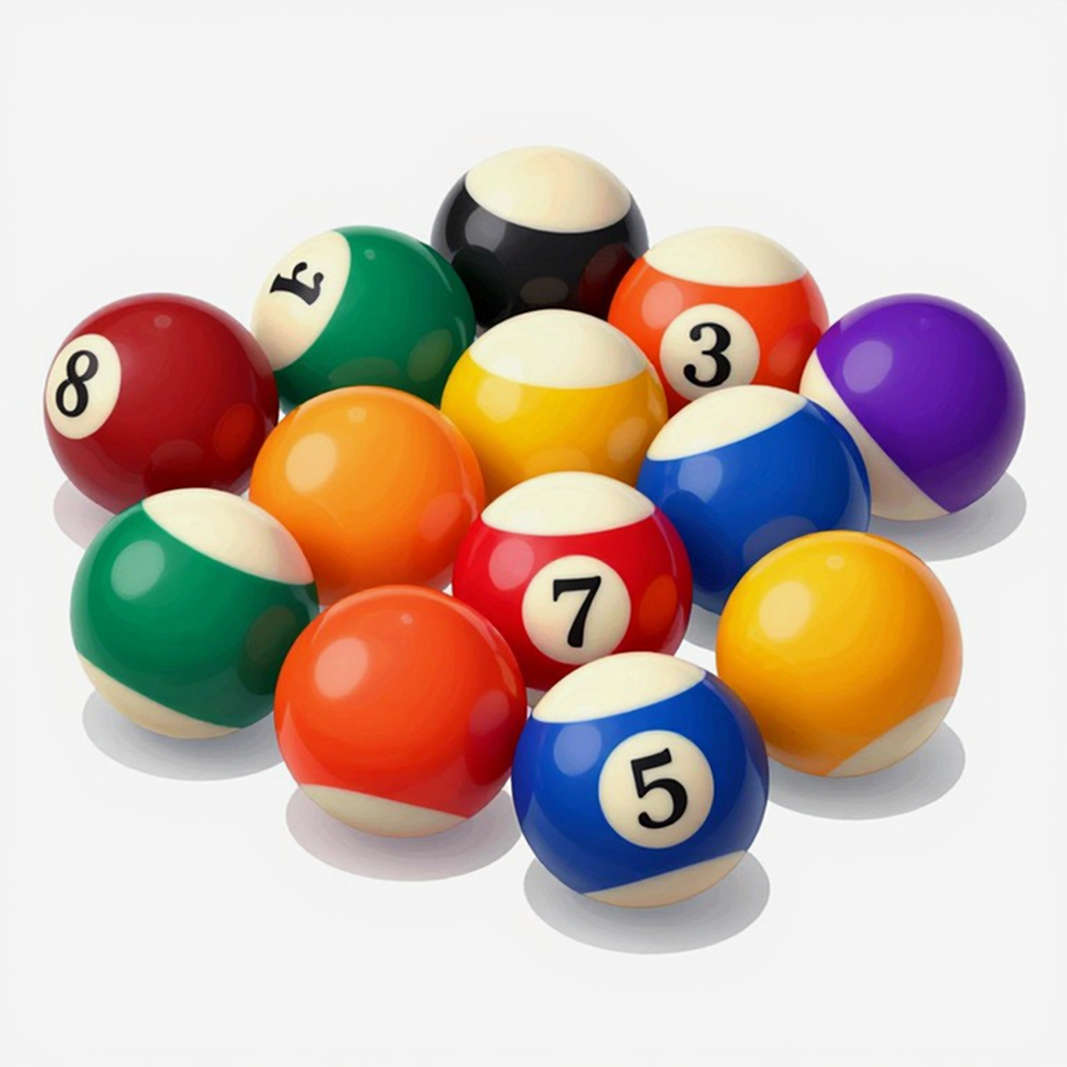
I want to pause on the call-shot rule, because it is the technical spine of the whole event. In 10-ball, a player must name the ball and designate the pocket before shooting. A ball that drops by accident does not count. This erases the luck factor that makes 9-ball volatile, where a bad shot can sometimes still score. Call-shot turns the table into a test of cue-ball control, shot selection and safety discipline, not of momentary inspiration. A player who is technically less complete will be eliminated, no matter a few flashes of brilliance.
The 2026 World Cup taught me the most important thing: numbers are only beautiful when they know how to stand on the side of the story. And the story here, with Duong Quoc Hoang, is a cueist learning to stand firm in a far harsher format. Before trusting a number, I ask where it was born. Just like watching a player before making a judgment. Hoang's "round of 16" number was born on home soil, before a home crowd, in a tournament where he already knows the table, the atmosphere and the rhythm. That is grounds to say he is improving in this very environment — but not enough to call him a title favorite.
Domestic media call Hoang a "heavyweight contender for the championship". But the source article does not provide his world ranking. It only says he is Vietnam's No. 1 — a national ranking, not a global one. In a field of nearly 200 cueists from 40 countries, where the traditional billiards powers such as the USA, the Philippines, Chinese Taipei and Europe are still unnamed, the absence of a world ranking turns the "contender" claim into a one-sided opinion. Not false, but unverified.
This is not the first time I have seen this kind of framing. Binh Duong back then had no expensive software, only people who believed each number would find its way. And local media tend to inflate their own stars. That is a natural instinct, not a fault. But the reader needs to distinguish expectation from evidence.
What I find more fascinating here is not an individual cueist but the structure of the whole system. Vietnam hosting two years in a row is a signal of organizational capacity, sponsor confidence and market scale. A tournament with more than USD 700,000 in prizes across three events is not a one-off exhibition. It is an ecosystem.
Besides Hoang, four other Vietnamese cueists are named: Luong Duc Thien, Pham Phuong Nam, Nguyen Anh Tuan and Chu Viet Hoang. This is a signal of domestic squad depth — not one flag-bearer, but a full line-up. In football, people call it squad depth. In billiards, it means a development pipeline is forming, from the pool hall to the international stage.
The side events are named after brands — the Poison Saigon Women's 9-Ball Open and the Box Billiards mixed-doubles open — showing that equipment makers are financially bound to the tournament. This is the classic sponsorship model of the billiards industry: the brand enters the event name, the event name enters consumer awareness, and awareness returns as sales. It is not loud, but it is effective.
The empty stadium of 2026, I could hear clearly the sound of the ball rolling and the sound of a note sheet dropping onto an arena seat. The lesson from that period still holds when I look at a tournament with a home crowd: environmental factors influence results more than people think. For Hoang, home soil is a double-edged sword. It can lift him with support, or weigh him down with the expectations of a nation.
Here is the counterintuitive point. We usually assume home advantage. But in a format demanding steel nerves like 10-ball call-shot, pressure from the home crowd can paralyze the focus needed for every called pocket. When every shot must be declared in advance, there is no room for hesitation. And hesitation is what a cueist carrying a national burden is most prone to.
I am the one who stays with the numbers after the arena lights go out — you may call it a job, I call it a fate. And from that angle, I see something the flashy headlines overlook: Hoang's realistic benchmark is the round of 16, not the title. He reached it once, at home. That is a genuinely elite result in a field of nearly 200. But winning is another level.
One governance note: professional billiards is governed by the WPA, different from snooker's WPBSA and WST. The 2026 snooker match-fixing stories have no direct bearing on this event, and mixing the two governance systems is a mistake to avoid. There is no sign of any violation in the source about the Phu Tho tournament.
One variable remains unquantified: the length of the format. The source does not state the race-to length per match or whether it is single elimination. In billiards, a short race increases variance, a long race increases the win probability of the better player. Without this information, any estimate of upset potential is only directional.
Every season is a string of data, but my memory is not in any model. What I carry from these years is not a prediction of who will win, but a way of reading small signals before they become headlines. With Duong Quoc Hoang, the small signal lies in the three-point trajectory: early exit, round of 32, round of 16. That is a line moving up.
Football has its own rhythm, data has its own rhythm. It took me years to learn to make them stand in the same sentence. And billiards is the same. The question I leave for the next round is not "will Hoang win?" but "can he keep that trajectory?". If the round of 16 is repeated or surpassed, the "heavyweight contender" claim will have grounds. If not, it remains a beautiful expectation.
People see the winning shot, I see the twenty quiet minutes leading to it. In billiards too: people see the finish, I see the quiet called pockets before it. And in a tournament where luck is removed from the equation, those quiet moments are what decide who is still standing when the arena lights go out.